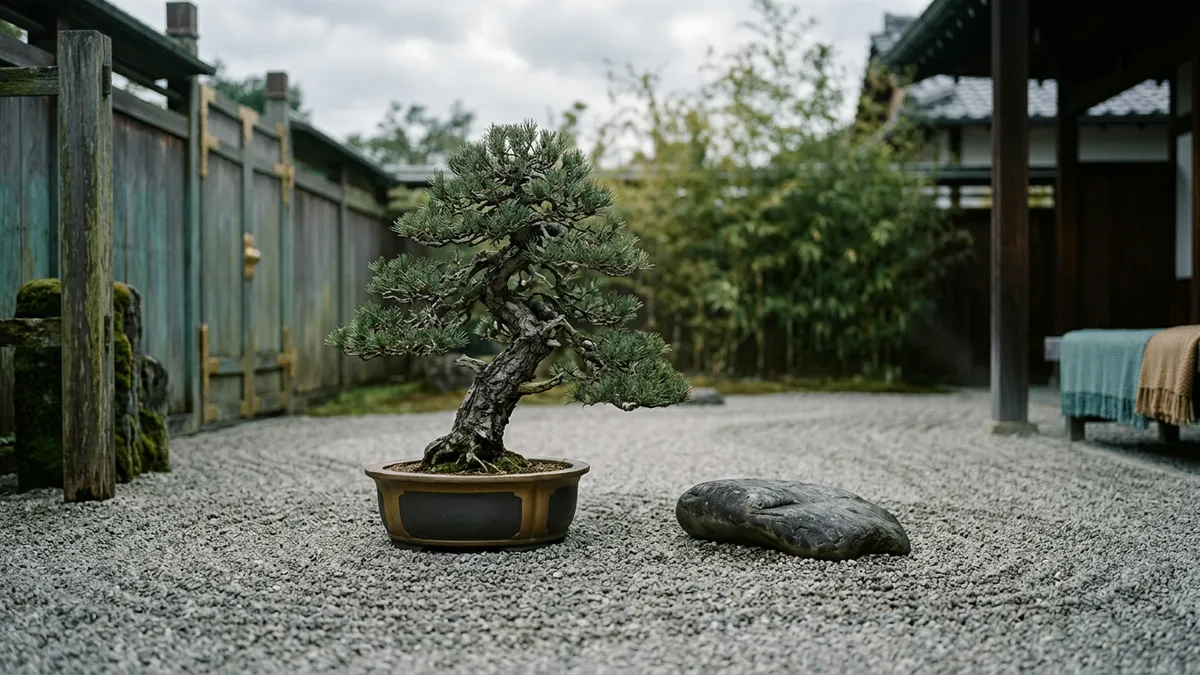
The gaman meaning, in short: gaman (我慢) is a Japanese word for enduring something difficult with patience and self-restraint. It covers everything from putting up with a long wait to bearing real hardship with dignity. For money, the takeaway is practical: you can feel a strong urge to buy and still choose to wait. Learning to sit through that urge is one of the most effective ways to stop impulse spending.
Gaman meaning: what the word really says
The Smithsonian American Art Museum, in its exhibition of objects made by Japanese Americans held in World War II incarceration camps, defines gaman as bearing the seemingly unbearable with dignity and patience. In everyday Japanese the word is also used more lightly, for self-restraint or "putting up with it": holding back a complaint, waiting your turn, pushing through discomfort. The idea is often associated with Zen Buddhist teaching.
"Strategic endurance" is an interpretation
Gaman translates as endurance, perseverance or self-restraint. Calling it "strategic endurance" and applying it to spending decisions is this article's framing, not a dictionary definition.
The limits of gaman
Gaman isn't automatically good. Too much of it can mean quietly tolerating things you shouldn't: exhaustion, pain, unfair treatment or a money problem you need help with. The useful version for personal finance is narrow: patience with wants, never neglect of genuine needs.
Why impulse spending is so hard to resist
Impulse purchases are rarely about the item. They're often about a feeling: tiredness after work, boredom on a quiet evening, a dip in confidence after scrolling through other people's lives, or a "deal" that seems to be disappearing. Buying brings quick relief, but the feeling tends to return, and the costs pile up.
Common triggers and gaman-style responses:
| Trigger | Typical impulse | Gaman response |
|---|---|---|
| Stressful day | Treat yourself online | Name the feeling; take a walk; revisit tomorrow |
| Boredom | Browse shopping apps | Replace with a free default activity |
| Countdown "sale" | Buy before it ends | Assume another sale will come; wait anyway |
| Social comparison | Upgrade to keep up | Ask whether you'd want it if no one would see it |
| Payday | Spend freely while the balance looks high | Automate savings first so the "extra" isn't visible |
How to stop impulse spending with gaman
Set a waiting rule in advance
Decide your rule while you're calm. Example: 48 hours for any non-essential purchase over $50 and one week for anything over $200. Choose amounts that suit your budget; what matters is that the rule exists before the urge does.
Name it, then wait
When the urge hits, label it in a few words: "tired," "bored," "envious." Then step away: close the tab, leave the shop, put the phone down. Notice the restlessness without scolding yourself. That discomfort is the part gaman asks you to sit with.
Change your environment
- Delete saved card details and shopping apps.
- Unsubscribe from promotional emails and texts.
- Keep a "wish list" note instead of a shopping cart.
Reframe the choice
"I can't afford it" feels like loss. "I'm choosing to put this toward something I care about more" feels like a decision you own, and is easier to stick with.
Pay your future self
Each time you skip an impulse buy, move that amount into a savings account. Watching the "skipped purchases" total grow turns restraint into something visible.
Kakeibo: a Japanese tool that pairs with gaman
If gaman is the mindset, kakeibo (家計簿, "household account book") is a matching tool. According to its publisher, Fujin no Tomo Sha, journalist Hani Motoko's kakeibo was first published at the end of 1904 and has been issued nearly every year since. Her method was to set a yearly budget for each spending category and record spending against it, so every purchase is weighed against a plan.
Many modern versions add a monthly reflection: how much came in, how much you aim to save, how much you spent, and what you'd do differently. You can use a notebook or set your category limits with our budget calculator.
A 30-day gaman challenge
| Week | Focus | What to do |
|---|---|---|
| 1 | Notice | Log every urge to buy: item, feeling, strength from 1 to 10 |
| 2 | Wait | Apply your waiting rule to every non-essential purchase |
| 3 | Redesign | Remove two triggers (apps, emails, saved cards) |
| 4 | Review | Count how many urges faded; total the money moved to savings |
Your own log will tell you more than any rule of thumb: which feelings drive your spending, and how often the urge disappears once you wait.
When not to practise gaman
Don't postpone medical care, essential repairs or anything to do with safety. And don't let endurance stop you from asking for help: if debt or money stress feels overwhelming, a nonprofit credit counselor can help you build a plan. Our debt escape plan is a good place to start.
For more on why feelings so often beat plans, read our guide to the psychology of money, and for a simpler relationship with spending, our minimalist money approach.
Frequently asked questions
What is the meaning of gaman in Japanese?
Gaman (我慢) means enduring difficulty with patience and self-restraint. The Smithsonian describes it as bearing the seemingly unbearable with dignity and patience.
Is gaman a positive or negative trait?
It depends on context. It's admired as resilience and composure, but excessive gaman can mean tolerating things you should address or not asking for help.
How can gaman help with money?
It gives you a frame for pausing between wanting and buying. A set waiting period, a simple log and a savings habit turn that pause into lasting change.
What is the difference between gaman and kakeibo?
Gaman is a mindset of patient endurance; kakeibo is a household account book for budgeting by category and reflecting on spending.
How do I stop impulse buying online?
Remove saved payment details, unsubscribe from promotions, use a written waiting rule, and keep a wish list instead of a cart.
Try it yourself (15 minutes)
- Write your waiting rule (amounts and days) in your phone notes.
- Start a four-column log: item, feeling, urge strength, still wanted after waiting?
- Open or rename a savings account as your "skipped purchases" fund.
Sources
- The Art of Gaman: Arts and Crafts from the Japanese American Internment Camps, 1942–1946 — Smithsonian American Art Museum
- 婦人之友社の家計簿は創刊120周年を迎えます (Fujin no Tomo's kakeibo marks 120 years) — Fujin no Tomo Sha
This article is general education, not personal financial, tax or investment advice. Figures were checked on the date shown above and can change. Spotted an error? Report a correction — see our editorial standards.